
The man in 13 jackets: Benoit Richaud on Bolero for Zingas/Kolesnik, flying to Moscow, and crying at Sakamoto's final skate
French choreographer Benoit Richaud has become the name of the season. Half of the medalists at the 2026 World Championships skated programs he created.
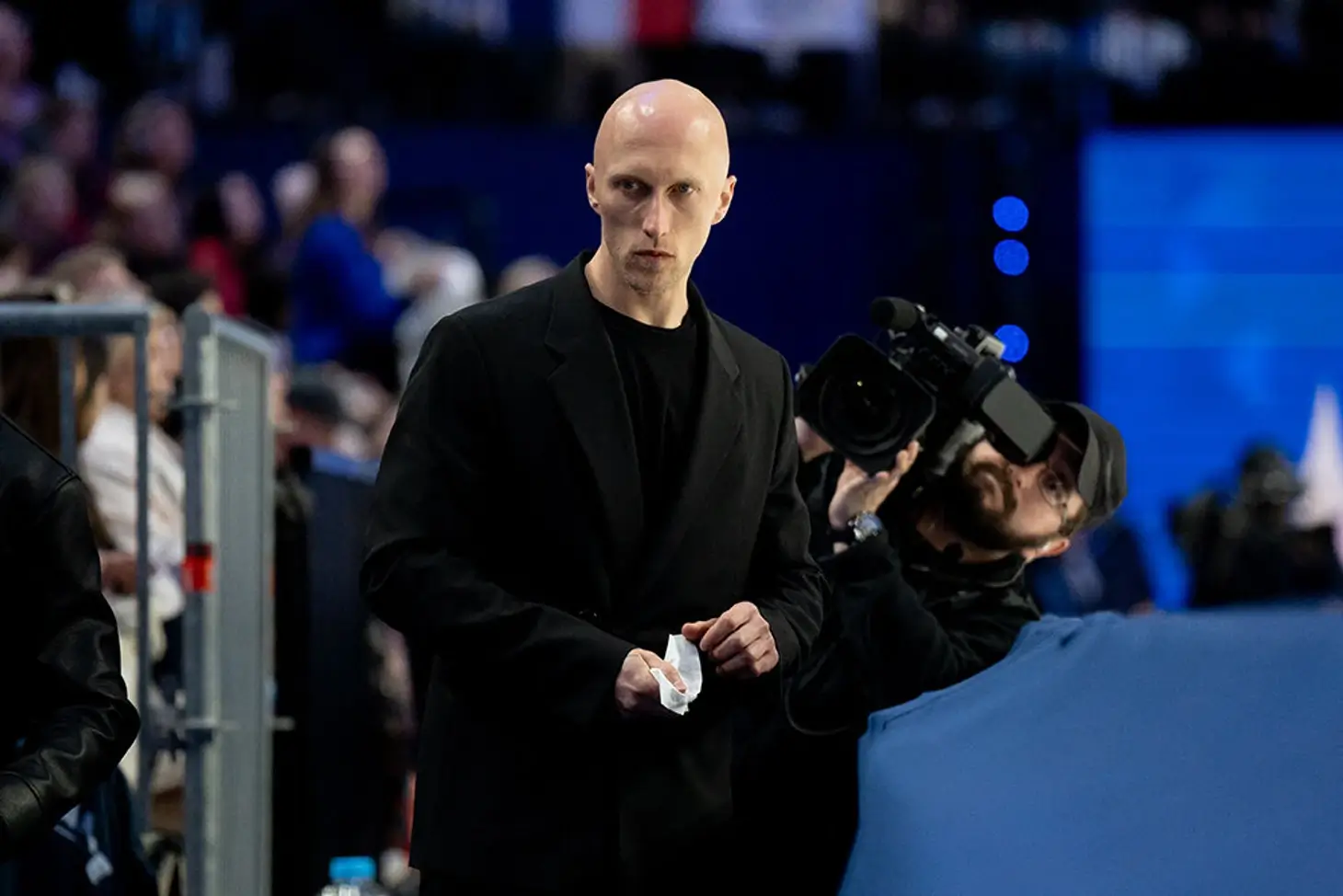
At the Milan Olympics, Richaud was a record-breaker in his own right: 27 programs for 16 skaters from 13 countries. Only the Montreal Ice Academy brought more choreography to the Games, and I.AM is a whole team. Benoit works solo.
He also became one of the Games' great memes. Clips of him swapping national team jackets for every skater he accompanied made the rounds far beyond the figure skating bubble.
But Benoit is no longer just a choreographer. He also coaches several skaters, and with real results. Canadian Stephen Gogolev had the best season of his career and openly credits Richaud's guidance.
I spoke with Benoit about where modern choreography is heading, his work with Vasilisa Kaganovskaya and Maxim Nekrasov, and the Olympic jacket meme that turned him into a social media star.
Richaud and Russian skating: Moscow, Trusova, Kaganovskaya/Nekrasov, and a summer camp with Fedchenko and Mishin
Where in the world have I caught you this time? It feels like you are never home.
I am actually home right now, in Avignon. I have a short break between trips. I have just come back from the United States, where I choreographed for several skaters at once, both singles and ice dancers.
Which part of the season is tougher: creating programs or traveling to competitions?
It is hard to compare. They are almost two different jobs. Choreography season is physically demanding. Competition season is more mentally and emotionally demanding.
The most intense stretch is probably the Grand Prix Series. It is event after event, I go to every stop, and the schedule is packed. After that it gets easier: nationals, Europeans, Four Continents, Worlds. You can breathe a little. This season the Olympics took a lot of time and energy, but normally winter is fairly calm for me.
With my own skaters, I have a specific system. When I am not there, they train on their own. Every session is planned in detail: how many jumps, spins, skating skills exercises. I am always available for video calls, detailed feedback, and analysis of the work they have done.
That is how we worked with Stephen Gogolev this season. From spring until the end of July, we focus heavily on technique. In August, we start bedding in the programs. Maybe singles skaters were not coached this way before, but the system seems to work.
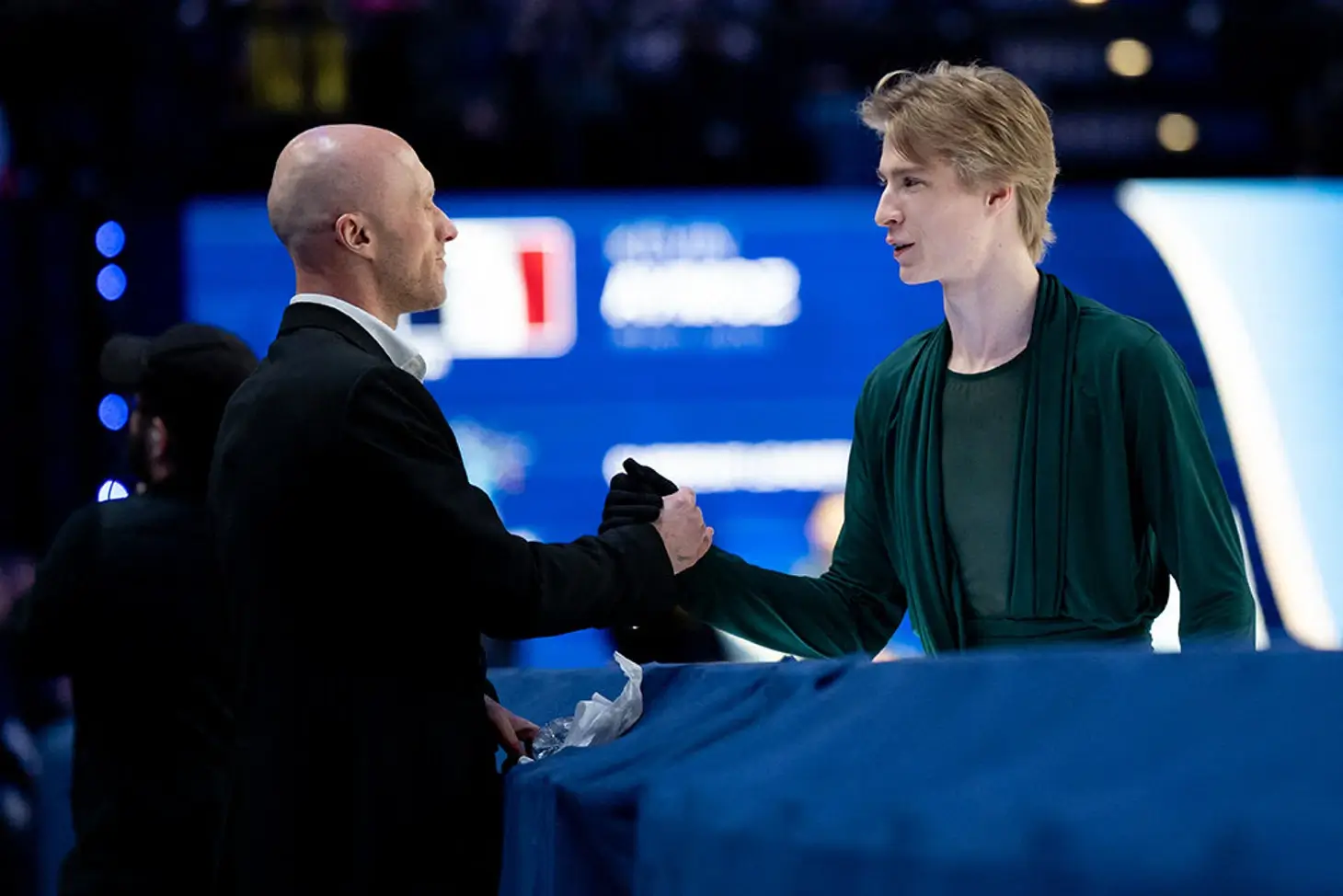
When technical questions come up, I go to people I trust. I am not a jump specialist, and I have never pretended to be one. But I am lucky to work with real experts: Alexei Mishin, Cedric Tour, Ans Bocklandt. They are magicians. I ask a question, and they always have an answer.
That kind of setup only works with senior, top-level athletes. Juniors are a different story.
It helps that we spend the whole summer at our training camp. That is where we build the system, choose the exercises, and create the atmosphere. Once the season starts, the main goals are staying healthy, sticking to the plan, and peaking at the right moment. Between competitions, there is obviously not much time to build new elements.
Is that your camp in the Alps?
Yes. This year we will again spend three weeks in Courmayeur, Italy, and then move to France for two months. We have the rink in Angers, the one that usually hosts the Grand Prix.
Before that, I will run a small private camp for my own team, the skaters I coach. So my whole summer is already booked.
Who is coming to your camp this year?
There will be skaters who have been coming for years, and there will be new names from the United States, Asia, and Russia, including big champions and top athletes. Let me give the names a little later, but believe me, it will be interesting.
And what about coaches?
We will have our usual team: Cedric Tour, Leonid Sviridenko, Ans Bocklandt. There will also be new people. For example, we are expecting Sofia Fedchenko with her group, and Andrei Lazukin will be there for several weeks.
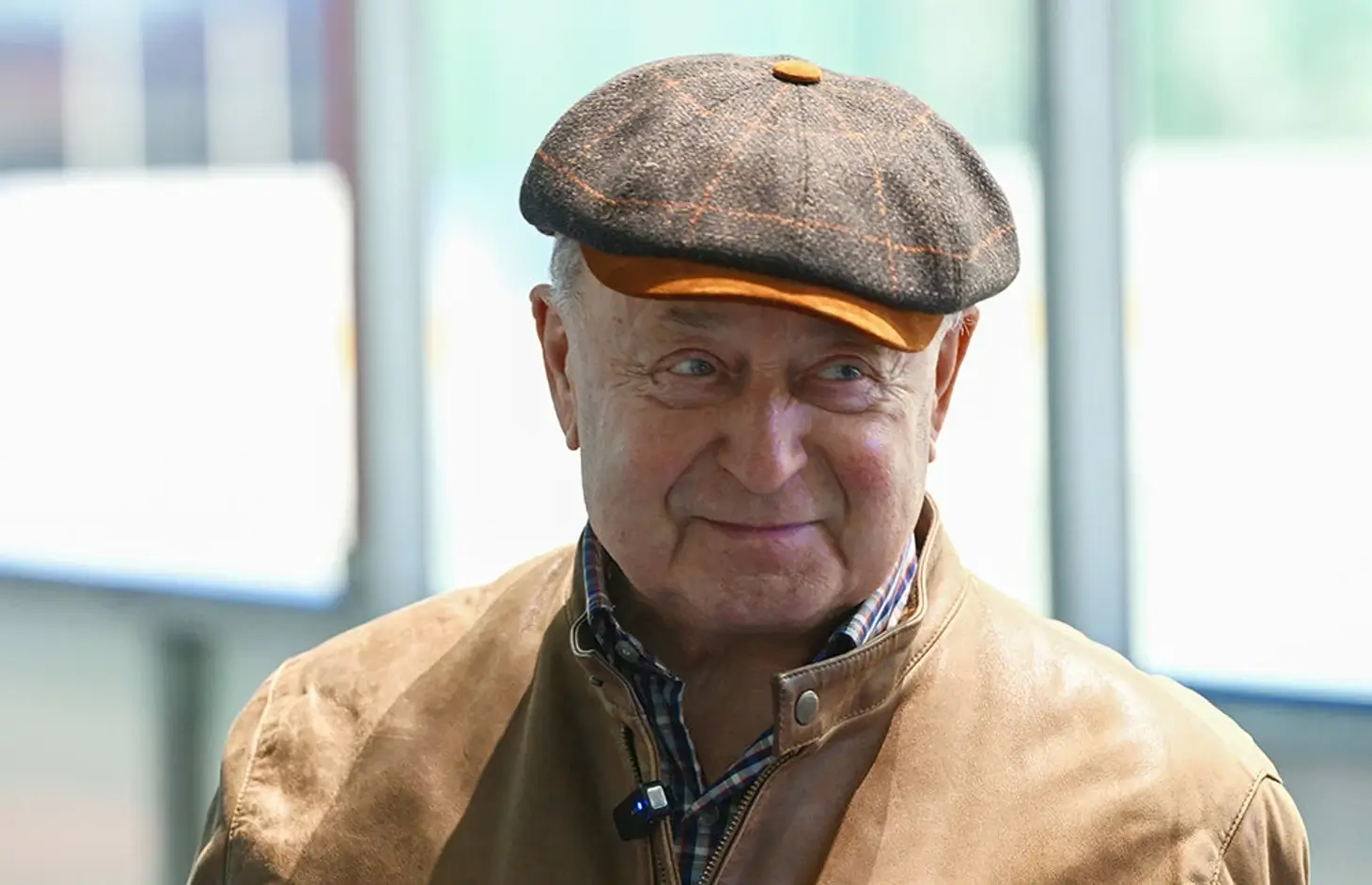
And of course Alexei Mishin himself will be there. When it comes to technique, I trust no one more. His method is a miracle. It always works. I do not think everyone fully understands what a genius he is. Yes, I know he is a legend in Russia, but believe me, his stature is even bigger than that.
Several Russian skaters were supposed to come to me, but not everyone can make it because of visa issues. So I will choreograph for some of them in Moscow instead.
You are going to Russia?
Yes, I will spend nine days in Novogorsk. I will work with your ice dancers, and early next week I will choreograph a short program for Alexandra Trusova. It is a shame visas are so complicated now, but with Alexandra everything worked out in the best possible way.
Which dancers will you work with?
Vasilisa Kaganovskaya and Maxim Nekrasov again. They are a very interesting team, and I am already excited to work with them.
Last season you gave them a very successful free dance. Did you like how it grew by spring? Did it change much?
It opened up and became stronger. I loved watching them focus on quality instead of rushing to cut the program apart and change everything. In ice dance, so much depends on the judges, and people are used to listening to their feedback. That makes me even happier that Vasilisa and Maxim kept the original idea. The changes were minimal.
I believe that once a program fits you, you should skate it in and let it grow, not keep rebuilding it. I stayed in touch with the skaters and Alexei Gorshkov all season. We chose the costumes together, and I followed all of their competitions.
What do you think is the reason for their success?
They have an excellent coaching team, people who understand ice dance and look ahead. And the skaters themselves are a joy to work with. They are open, easy to communicate with, and they love figure skating.
They are very different from the previous generation. Their skating is different, their style is different. There are probably other young teams too, but I admit I have not followed Russian competitions closely enough to know all the duos well.
But I can see that Russian ice dance has changed a lot and made a huge leap in the last four years.
So I am sure ice dance is on the brink of a shift. It is time for the young generation. Sometimes one generation dominates dance for 10 or 15 years, everyone gets used to that level, and then young talent arrives and a new era of progress begins. I am proud to be part of that.
I want to see Russian dance teams burst back onto the international scene. That will be exciting.
Have you already chosen the music for Vasilisa and Maxim?
Of course. All I can say is that it was my idea, and nobody has ever skated to this music before. It will have three parts with completely different moods, and the pieces are special.
The program will be different from what you saw last season. That was more emotional and neoclassical. Now we want something modern, more contemporary. At the same time, the audience will understand the story they are telling on the ice.
I will also choreograph a dance for Alexei Gorshkov's junior team, Fefelova and Valov. They are incredible, and I am happy I can make a program for them. It will be my first time working with junior ice dancers, but they are amazing.
I hope the ISU allows your juniors to compete and the world gets to see this team. Believe me, they will be unbeatable. No one will get past them. No offence to other teams, but Maria and Artem are on another planet.
This season you also choreographed a program for Sofia Muravieva. Were you happy with how it turned out?
I am pleased that they kept the program almost exactly as we created it last summer. I think Sonya herself insisted on that, and Mishin now more often agrees with the original vision for a program.
If I am not mistaken, Sonya later polished the program a little with a local coach. Help me remember his name. He is bald, like me.
Nikolai Moroshkin?
Yes, yes. I think we are very much on the same wavelength creatively; he understood my idea. I can see they worked on the choreography, but very carefully. I am absolutely not against a program being developed and improved. That is not changing it. That is evolution.
"Everyone censors themselves": why Richaud wants skaters to speak more freely
You are in the thick of choreography season right now. Where do all the ideas come from?
It all starts with the music. Once the athlete and I have chosen a piece, everything else seems to happen by itself. I do not know how to explain it, but that is how it works.
We recently worked in America with Korean skater Haein Lee, and she was surprised that it took us only two hours to choreograph the short program. Of course, that was just the foundation. We then spent four days adding details and decoration. But in my head, the program appears immediately, as a whole.
I have a notebook where I write down every idea that comes to me for each athlete: music, images on the ice, costumes. I used to be a musician, but the most important thing is the incredible partnership I have built with Cedric Tour. He is so talented. We understand each other from half a word, and I am very lucky to have that.
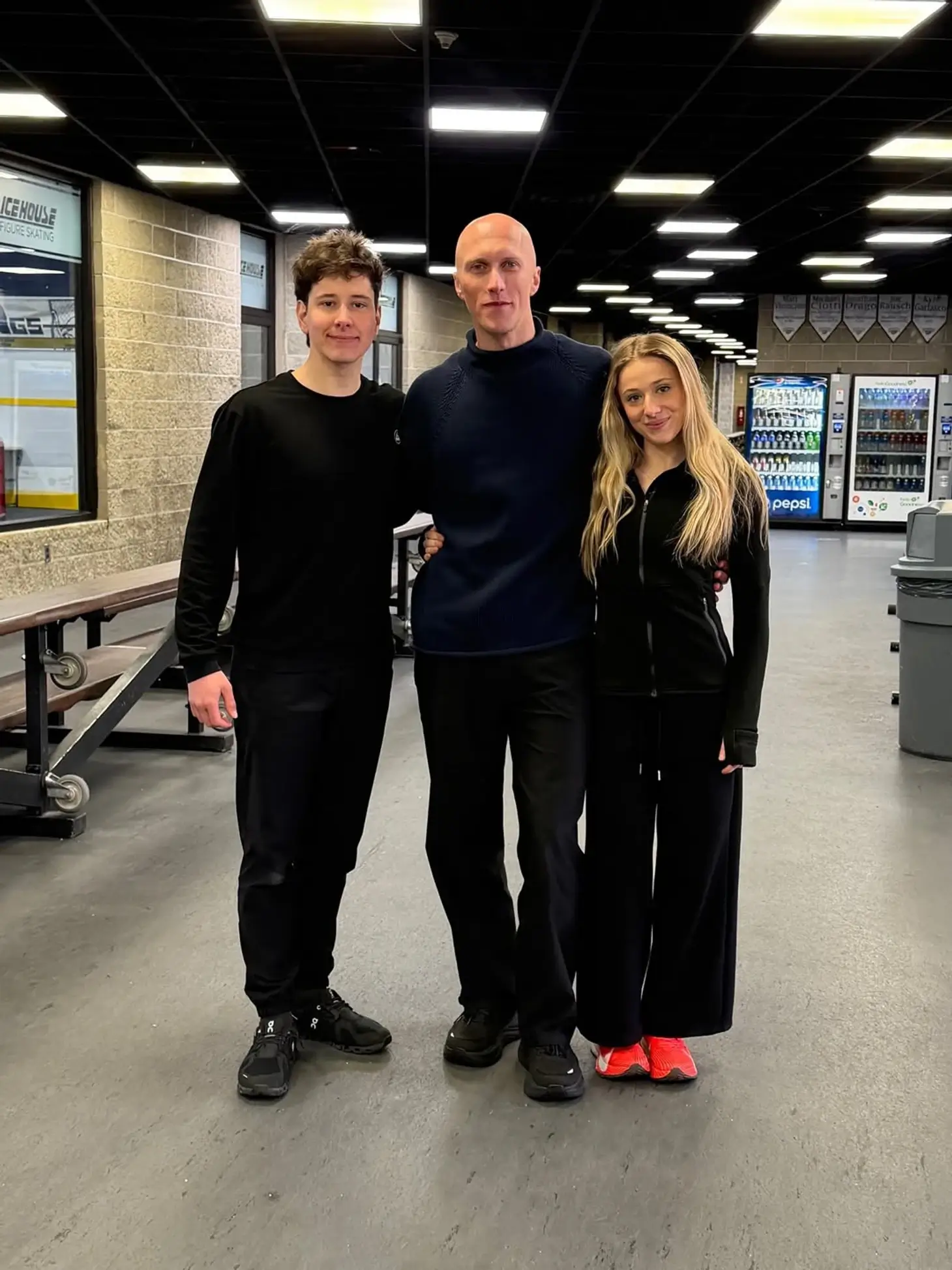
I read and watch a lot, but not as homework for a program. I do it for myself, because I am interested. For example, I just choreographed the free dance for Emilea Zingas and Vadym Kolesnik, the American ice dance team and 2026 World bronze medalists.
It is "Bolero", and of course I have seen Bejart's ballet more than once. But that was long ago, not right before stepping onto the ice with them. Choreography is emotion and feeling, not dry planning. I do not keep sketches of specific movements in my notebook. I step onto the ice, and it happens.
I think the program is very interesting. It is a huge step forward from last season. Everyone who has seen them in these images has been deeply impressed. The viewer almost has no time to process everything happening on the ice, because the program is so dynamic and fast, with so many nuances and details pulling your eye.
Was "Bolero" your idea?
Yes and no. There is a wonderful story behind it. I really had thought about suggesting it to Vadym and Emilea, but later, not this season. I even had it written in my notebook, see? But I was not sure they were ready to appreciate that choice yet.
Last year something similar happened with Prokofiev's "Romeo and Juliet": at first they did not like the idea, and later they fell in love with the music.
Then their coach, Igor Shpilband, called me and said, "Benoit, I think we found it. We were playing different tracks with the skaters at the rink, and suddenly Ravel came on. You should have seen how instantly they felt the music. I will send you the video, it is incredible." I watched it and understood: they were ready.
But you have to understand, this will not be a classical "Bolero". Yes, the program includes part of the original composition, but Cedric wrote completely new music inspired by Ravel. You cannot listen to it or download it anywhere. It was created specifically for this program.
Is it intimidating to take on "Bolero"? It is used often in figure skating, but usually by very experienced athletes.
I think the music suits them precisely because they are still a young, new team. Believe me, you will like it too. I saw people online questioning the choice, but I am sure everyone will change their mind when they see the full program.
Zingas and Kolesnik are the new generation of ice dance. They remind me a little of Tessa and Scott, Charlie and Meryl, when they arrived and swept away the old generation. You could immediately tell they came from a different world. I get the same feeling from Emilea and Vadym. I am sure they will be major players in the new Olympic cycle.
How do you explain their breakthrough? A year ago, no one expected them to qualify for the Olympics, and they ended up in the top five and won World bronze.
They are very well matched, they work a lot, they do not waste time on nonsense, and they do not pay attention to what people say about them. Few people know that Vadym was seriously injured for several years, had major surgery a year ago, and only this past season was finally able to work at full strength.
They have matured a lot, and Emilea has grown incredibly as a partner. Just think: four years ago she was still a singles skater. I do not think anyone in ice dance has made such wild progress. She is already at the top of the world, and there is much more to come, believe me.
It also matters that Zingas and Kolesnik are their coaches' top priority. Igor has several teams, but among the senior teams he is fully focused on Emilea and Vadym.
I like their mindset and their approach to life. They speak openly about their ambitions and have always done what they believe is right, even before they broke into the world elite. If they are unhappy with something, they say it directly. They are not trying to be politically correct or pleasant for everyone.
There is something fresh about them, even in how they talk to the press. That is what marks the new generation I was talking about. What did we used to hear all the time? "The main thing is to enjoy the skate; we are not thinking about results or medals." Now new skaters come along and say, "We want to win. It did not work out this time, but next time we will be stronger and get on the podium."
There is a problem: figure skaters speak to journalists in a very old-school way. Look at basketball, tennis, football. Athletes there are not afraid to talk. Figure skaters worry they will get a dozen critical messages on social media. Fine, a few idiots write something unpleasant. So what? Tennis players get thousands of those messages and do not pay attention.
Figure skating needs more personalities, more interesting speakers, more people who are not afraid to say what they think.
Georgian pair skater Anastasia Metelkina also openly says her goal is Olympic gold.
And she is right. If you do not care about the result, why are you in sport? Go skate for yourself and enjoy it. Saying you want to win is normal. Nobody knows whether you will succeed or not. That is sport. But why should you be ashamed of your ambition?
Imagine a tennis player arriving at Roland Garros and saying, "I want to feel these beautiful courts, the energy of the crowd, and show my beautiful strokes." Nonsense. He comes to win. And yet those are typical figure skating comments. Just replace the court with the rink.
In Formula 1, athletes get angry, devastated, emotional, and they do not hide it. In our sport, everyone censors themselves.
Remembering the Olympics: what happened to all those meme jackets?
This season was a breakthrough not only for Zingas/Kolesnik. Stephen Gogolev and Nina Pinzarrone had very strong seasons too. Do you feel you had a hand in their success?
Honestly, I do not think about it that way. I am happy that we trust each other, and I am proud to work with wonderful colleagues. We have a great team, so it is clearly not only about me.
I am lucky to work with great skaters where everything happens naturally, without conflict or power struggles. You were at our camp. Everyone gets along, the skaters are friends, and the atmosphere is very friendly.
You choreographed the final short program of Kaori Sakamoto's career. What did you feel watching her at Worlds?
I was happy and sad at the same time. But more than anything, I felt pride, for her and a little for myself. For the first time in my career, and I am only 38, still very young, I was beside a skater from her first senior season to her last. We made many programs together and walked that whole road side by side.
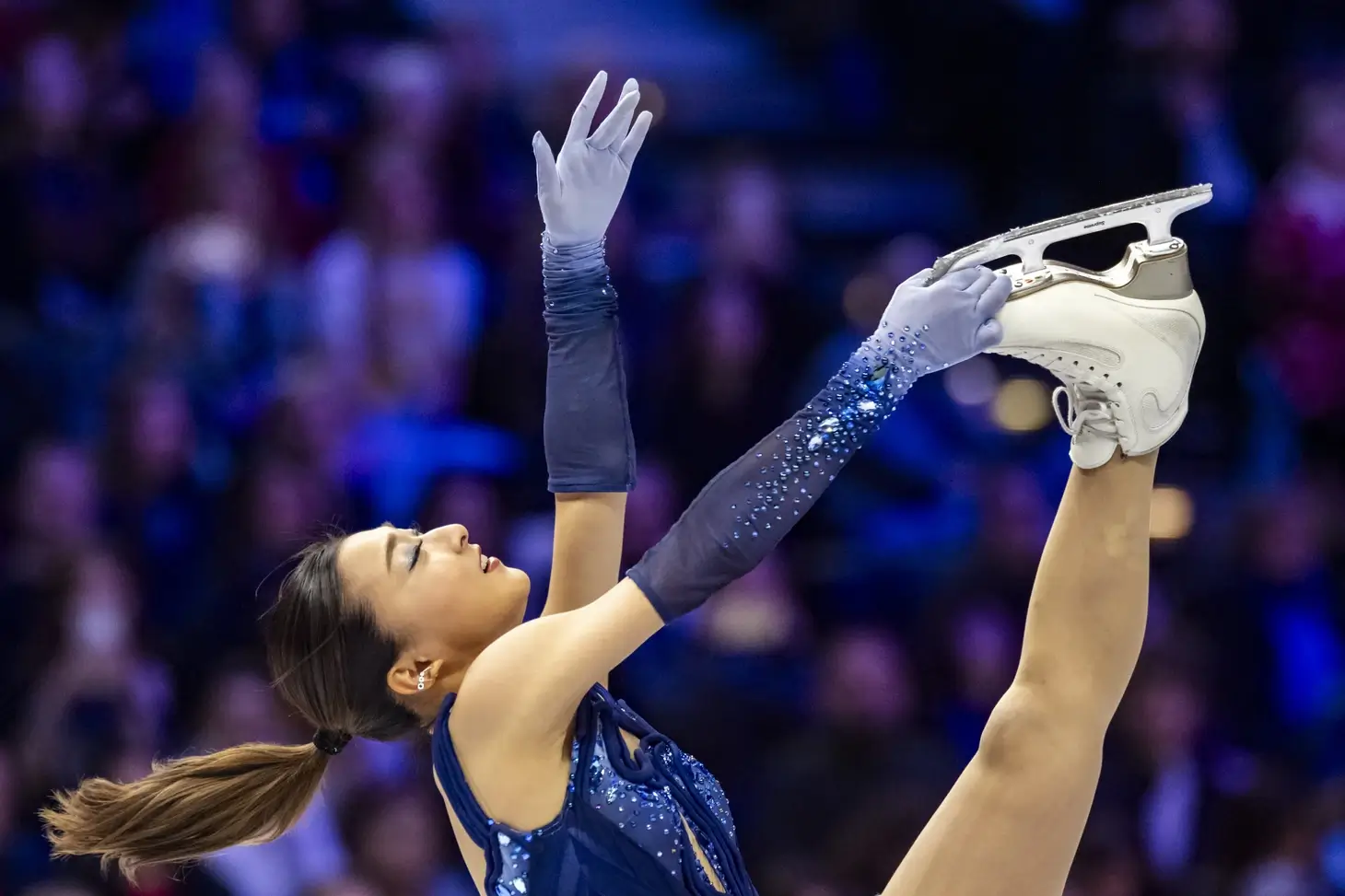
I never tried to change her, because that would be impossible. She is strong, whole, unlike anyone else. She brings light to everyone she meets. Are you sad, are you feeling low? Kaori can lift your mood just by walking into the room. She has a gift for making people happy.
It is hard to put into words, but looking back on this season brings up very strong emotions. Kaori and I talked a lot recently, and I did not expect it at all, but she told me she was very grateful. Her mother also wrote me a very warm message thanking me for helping reveal Kaori as a skater.
It is hard to believe now, but nine years ago choreographers were not lining up for her. Other Japanese skaters were in the foreground then; Sakamoto was still in the shadows.
Her final skates in Prague were an incredibly beautiful closing note to a great career.
Admit it: did you cry?
Yes, of course. But even then, I felt how lucky I was to have worked with her and how beautifully she was ending her competitive career.
Were you upset by her silver in Milan?
I am sorry the Olympic skate was not perfect, but this is sport, this is the Olympics, and anything can happen. Look at Ilia Malinin: everyone was sure he would win, and then he did not.
But that is their story, and over the years I have learned that everyone has their own path. What happened, happened. I told Kaori that if she wants to win the Olympics, she will have to come back, haha.
Since we are talking about the Olympics: your constant national-team jacket changes became one of the big memes of the Games.
I did not expect it at all. It was not my first tournament sitting in the kiss and cry with skaters from different countries, but at the Olympics the focus is on the country and the flag. I was told the jacket videos went viral and people were writing about them on social media all over the world. Great. The more attention figure skating gets, the better.
In Milan, you were with 16 skaters from 13 countries. How many jackets did you have, and where are they now?
There were a lot of jackets, yes. Some sets were sent to my home before the Olympics, and some were given to me in Milan. But I brought home only one jacket, Team Canada's, and I do not wear it. Oh, I also kept one French sweatshirt. I wrap myself in it at home in the evening when it is cold.
I gave the rest of the Olympic wardrobe away in Milan to friends and acquaintances. I would gladly have given you a couple of jackets if you had asked. So now I am back in my own clothes, the same black as always.
You are called one of the most stylish coaches. Which uniform did you like the most?
Canada's: the colors, the cut, the overall style. The American athletes had a great collection, but coaches had much less to choose from, so I will say Canada.
But if we speak seriously about what this Olympics gave me, it gave me calm. Not confidence, because if I say that, people might misunderstand. Calm is the better word: a quiet understanding that I built the work the right way. Almost everything I created brought results. There is a huge field ahead of me, and I am ready to walk into it.
"Not everything is measured in money": Russian skaters, fees, and saying no
How are you dealing with this new level of popularity?
I like it, because I see it as popularity for figure skating, not for me personally. I have always said I want to change the situation our sport is in. Figure skating deserves more attention, more spectators, more views. In that work, nothing is too small to matter.
At Worlds in Prague, I once stood outside the arena for two hours signing autographs and taking photos. Not because I need recognition, but because I know it matters to the fans.
I am sure figure skating is heading for a new boom over the next 10 years, and our job is to help that happen. Coaches should be part of it too. I like how Eteri Tutberidze approaches this, for example. She never refuses a fan a photo or an autograph, and she responds kindly to those requests no matter how much of a hurry she is in.
After this season, there must be a line of skaters wanting programs from you. Do you have to turn people down?
I try to work with everyone. I am still deeply interested in it, and I want to develop figure skating by working with different athletes. But sometimes I have to say no because of schedule or logistics.
And sometimes, though rarely, I can see that working together simply does not make sense. Sometimes it is clear that the skater and I see the work differently, or have different ideas of what a program should be. Why waste their time and mine?
Has the fashion in figure skating changed, choreography-wise?
I think there is more courage now. Skaters are less afraid of strange, unexpected music, less afraid of asking, "What will the judges think?" That makes me very happy. I see more of the athletes' own taste on the ice. They are skating to music they chose themselves.
They are also more willing to experiment with style instead of squeezing themselves into images they have already found. Maybe that is one of the trends. The more variety there is on the ice, the stronger the audience response. I think we are moving in the right direction.
But figure skating is such a subjective sport, so dependent on the judges. Do you really not think about how they might score it?
No, never. The only criteria are what I like and what the athlete likes. Even a crazy idea can be staged brilliantly. After that, everything depends on whether the skater can present it properly in competition.
You could even give Ilia Malinin a comic program. He would just need to play with the audience and skate it well. Then it would work and become a successful program. Everything comes down to quality: the quality of the program and the quality of the skating.
Do your program fees rise as your popularity grows?
All top choreographers work at roughly the same level of pricing. My fee went up a little after I won the ISU Skating Awards prize for best choreographer. Besides, everything is getting more expensive. But my rates have only increased slightly.
Can you give a discount if a skater interests you but has financial problems?
Sometimes I help younger skaters or families when I feel a real potential or when a story genuinely touches me. Figure skating has given me so much in my life, so I also like being able to give something back when I can.
Which skaters would you like to work with?
I would be very interested in choreographing programs for the strongest Russian skaters, especially your pairs and women. And for the new generation of Japanese athletes too. There are very interesting young skaters appearing there.
For now, you are the only foreign choreographer willing to work with Russians. Are you not afraid of backlash?
For me, skating has always been about people, creativity and human connection. I work with athletes because I believe in their talent, their stories and their passion for the sport.