
He Learned a Backflip, Skates to Tarantino, and Once Paid €400 for Dumplings. Meet Nika Egadze
Nika Egadze is the star of Georgia's young national team. He's also Eteri Tutberidze's main international asset — at least while Russian skaters remain suspended.
Last season was his breakthrough. A first Grand Prix medal and European gold pushed him into the world's elite, and the win in Sheffield handed his team its first real title in men's singles. After that, though, the season cooled off: 10th at the Milan Olympics, 11th at Worlds in March.
I met Nika in the Italian Alps, at Benoît Richaud's camp. He came here chasing new programs and confidence — this season he's out for redemption. We talked about growing up, money, the curse of the team event, and the backflip (yes, it's coming this season). The new programs and his personal life came up too.
Prepping for the season: training with Mishin, a Tarantino short, and that backflip
We opened with a bit of needling.
— Remember a year ago, you came out here to Courmayeur and interviewed Adam Siao Him Fa? I jokingly asked when it'd be my turn, and you brushed me off — said something like, win Europeans and then we'll talk.
— Exactly as agreed, ha-ha. A year from now I'll be waiting on a Worlds medal.
— I'll do my best.
— Let's start with the camp, then. Mountains, sun, this total resort vibe out here. How do you make yourself train every morning?
— The mountains and the resort are outside. The second you walk into the rink, you're in work mode — the atmosphere really pushes you.
— On social media it looks like summer camp.
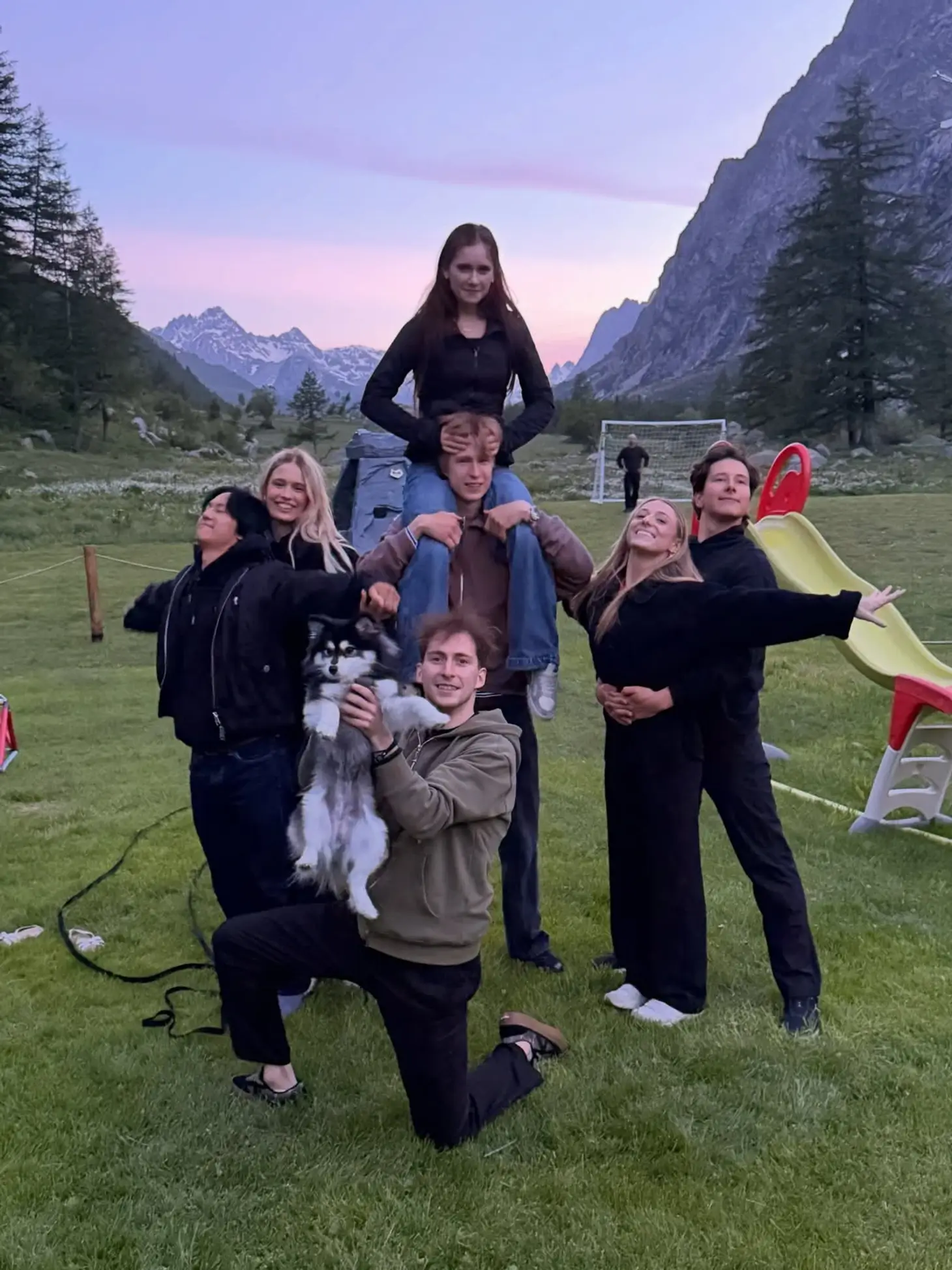
— There's some of that. We really do get along well. We have dinner together, hit the pool on days off. In the first two weeks a whole bunch of couples showed up at once: the American dancers Emilia Zingas and Vadym Kolesnik, Stephen Gogolev with Isabeau Levito, Kimmy Repond came to see Adam. Adam's dog is here too, so it's been a blast.
— What language do you all speak?
— All of them at once. Isabeau actually understands a bit of Russian now. I speak English with her — I need the practice — and she answers me in Russian. Stepan (we call him Stepan, obviously, not Stephen) flips between languages mid-conversation.
— Funny. But you cross paths at competitions too.
— Yeah, Stepan and I go way back, but Adam and I really got close here — he helps me with my boots (we skate the same model, Aura, and Adam's already a pro at mounting the blades and fitting them), and we just talk a lot. Everyone's looser right now, no stress, no rush. The schedule's pretty packed, but there's one day off. Training together brings you closer too.
For the second half of camp in France, Mikhail Shaidorov is coming, so the company there will be great as well. Stepan and I are driving to Angers (Benoît got handed the rink that hosts the French Grand Prix stage in the fall) — we'll rent a car and make a road trip of it. They gave us three days off, and we want to stop in Paris and see the country.
— This year you're spending almost the whole offseason at Richaud's. Why?
— Last summer I came to Benoît for three weeks — I'd planned on one — and choreographed both my programs, when I'd come for one. This year we decided it made more sense to come for the entire summer. More time to work on skating and components.
Last year we were locked in on the choreography; this time it's a proper camp with a real routine. A dance class in the morning, then a warm-up and the first ice session. After lunch there's more ice, then a separate skating-skills class with Benoît, and in the evening we work the program. At the end of the day I still try to get to the gym — I need to rebuild the muscle I lost over the break.
Right now there's a lot of technical work — there's time for it, because we're choreographing calmly, no rush. I'm trying not to force things: in the spring I didn't skate at all for a month, then trained an hour a day, and now the main job is getting every jump back.
— Is it hard getting back in shape?
— Not easy.
I've already had a few group sessions here with Alexei Mishin — on jumps. It's totally new for me, pretty unusual — fascinating to hear him break down the technical stuff. He's got an incredibly sharp eye for jump details; he sees right away what to fix and how to make it cleaner.
We even started trying the quad loop — I used to do it, but that was a long time ago. Mishin tells me: take the entry like a Lutz, but make it a loop. After a couple of those triples he suggested the quad. It's my single least favorite jump, but now I'm fired up — I want every quad landed by the end of camp.
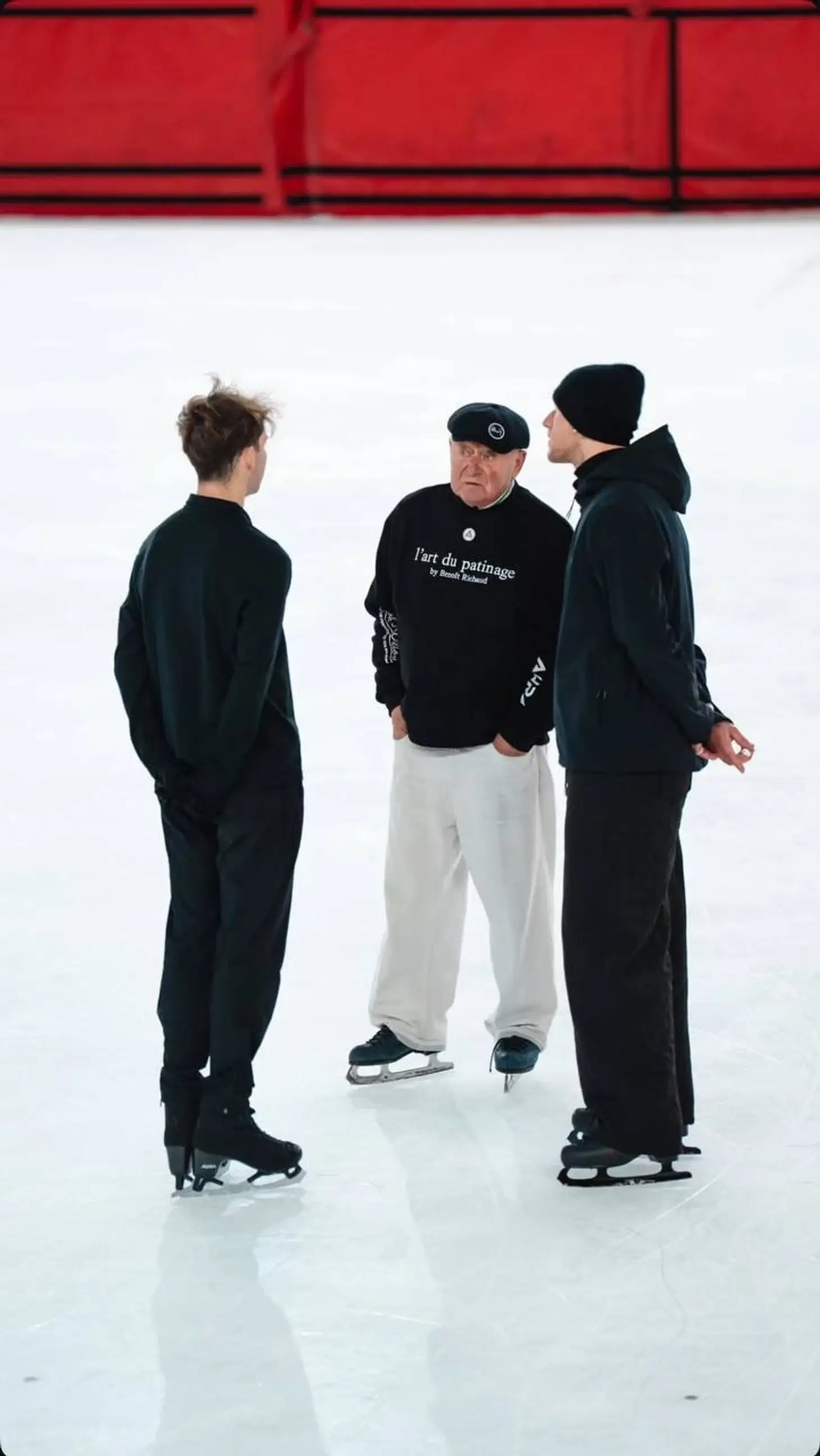
— First time training with Mishin. What's he like to work with?
— Fun, funny, kind. But honestly there are several coaches on the ice here: Cédric Tour, Leonid Sviridenko, Anne-Sophie Bocklandt — she used to coach Nina Pinzarrone. You watch how differently everyone works, broaden your horizons, learn.
I like that nobody tries to overhaul my technique — they just fix small things here and there. Exactly like with Eteri Georgievna.
— Do you stay in touch with your own coaches?
— Of course. We talk through the music, the training, how the choreography's coming. Just yesterday I had a call with Eteri Georgievna — I send her video of my jumps as I start landing them. From Georgia I reported that the Salchow and toe loop were solid, and here I've gotten the Lutz back and I'm on the flip. So she's up to speed, gave me advice and exercises to add. As always: don't skip the spins — which, honestly, I don't love working on, ha-ha. But I have to. No way around it.
— What about the new programs?
— We finished the short — turned out great, I think, I really love it.
— Who picked the music?
— Benoît and I decided together I wouldn't skate anything lyrical. We wanted something energetic and fun. In the end he and Cédric (Cédric Tour, Adam Siao Him Fa's coach, handles the music in Richaud's team — Sports) sent me a finished edit, and I said yes on the spot.
— Can you reveal it?
— The soundtrack to Quentin Tarantino's Pulp Fiction. I'm pulling inspiration from John Travolta's character.
— Seen the film?
— Of course, loved it. But I'm going to rewatch — there are layers to it, and not everything lands the first time.
The style is brand new for me — by vibe it's probably closest to my Deadpool exhibition number. Even the slow first part isn't serious, and then at some point it goes full goofy — ending with hip-hop. Now the main thing is breaking it in, so the movements are loose and I feel free out there.
Oh, and I still need the backflip back — it's slotted for the very end. Then it'll all click.
— Hold on, what backflip? You've never done one.
— Learned it in Georgia this spring. Luka Berulava and I took it up at the same time. It's a whole process: first you spend almost a month in a gymnastics hall. On the floor I learned the front, the back, and the side one — they call it the Arabian. Only then did I start trying it on the ice, at first with the same gymnastics coach who'd worked with me in the gym.
— Be honest: is it scary?
— The first tries — terrifying. You start with a spotter: Luka and a girl from the rink would hold me. Then I got cocky and decided I could do it without a spotter. Naturally, I went straight down flat — good thing it wasn't on my head.
— Were you at least wearing a helmet?
— Nope. Good thing it ended fine. Plenty of clean attempts after that. But I haven't trained it since, so I want to get back on it at camp. I'd love a bright accent in the program.
— Have you got the free skate music?
— In progress. So far we just know there won't be anything lyrical here either.
After camp, in August, I'll go to Georgia for a few days, then back to Moscow to polish the programs with our team.
I'll definitely start the season late, in October. Probably with the Challengers — I'm absolutely coming to Batumi for the home Tiraleti Trophy. Then three weeks to prep for the Grand Prix.
His bond with Tutberidze, getting fired up by Trusova, and whether he wants the Russians back
— You've skated under Tutberidze your whole conscious career — came to her as a kid, and now you're a grown man. Has the relationship changed?
— Of course. We've gotten much closer, there's more understanding, it's more of a friendship than something formal now. If practice is going sideways, we just calmly talk it out.
Eteri Georgievna might say "try to push yourself," or the opposite — "okay, then rest today." I ask her about things that have nothing to do with skating at all. She'll always listen and try to help.
— Practice going sideways: do you ever blow up, lose it?
— During my teenage years, yeah. Couldn't control my emotions, used to throw fits. Not a problem now — my head's more grown-up.
— Has it changed with Gleikhengauz and Dudakov too?
— We're basically friends at this point — we even try not to talk skating much, ha-ha. We talk about life. With Sergei Viktorovich we love cars — I asked his advice on which model to buy. With Daniil Markovich it's jokes; he's got a million funny stories.
— You've got a real men's group there now: you, Mozalev, Sarnovsky, and now Makar Ignatov too.
— Haven't really felt it yet — I've barely been in Moscow since Worlds. But I think it'll be great; all the guys land a ton of quads, so there's extra motivation in that.
— Don't the girls in the group push you the same way?
— Differently. The ones who really fired me up were Sasha Trusova, Kamila Valieva, Anya Shcherbakova. A girl goes out and does five quads — it's insane.
— Now you're back on the same ice as Sasha.
— Yeah, but I haven't gotten to train with her yet either. She was going to come to Benoît's camp, but it didn't work out. So now it'll have to wait until Moscow.
— Right now everyone's talking about a possible reinstatement of the Russians. Are you waiting for it?
— Yes, it'll be interesting. Higher competition, more eyes on skating, more people in the stands. Petya Gumennik competed at the Olympics, and it seemed to me the foreign fans were only glad of it.
So I'm waiting for the guys — Russia's got a lot of men who could go out and skate at the very top level. Petya's striking because the skating and the jumps are strong; Mark Kondratyuk, when he puts a program together, looks really interesting; Zhenya Semenenko is strong across the board too. He's actually here at camp right now, so we train together.
— You say you don't skip a single dance session here. I thought you weren't a big fan of choreography.
— It's the barre choreography specifically I'm not crazy about. But dance — jazz especially — I love. Here and in Moscow they teach it almost the same way, and I go gladly.
Barre work, on the other hand, makes muscles you didn't even know existed start aching, ha-ha. A few times it's triggered small but annoying injuries — a groin, a knee. With dance I'm just in heaven.
— Among fans there's this idea that choreography is Egadze's weak spot. Does it get to you?
— Not really. I get it completely — which is exactly why I'm at Benoît's for a second year, working on my second mark. The goal is to get better, more dance-like, more well-rounded. The new short is definitely out of my comfort zone: technique, dance, big-amplitude skating, the skating skills. I need to grow as a skater — that's obvious.
There's another thing too: when you skate for the joy of it and think about the choreography, your head comes off the jumps and you stress about them less. That's a bonus.
— Main goal for the new Olympic cycle? Medals?
— Consistency. No disaster skates — a steadily high average level. I want medals too, of course, I won't pretend otherwise. Why else are we in this sport? I want to stand on serious podiums — for myself and for my country.
— Are you ambitious?
— Yes. I figured that out especially clearly after flopping at the Olympics and Worlds.
— Flopping, really?
— Maybe that sounds harsh, but were those good skates? It lit a fire under me, made me angry. I want to prove — to myself, too — that I can do more.
— But this same season you won European gold. That's not enough?
— No.
What's wrong with the Olympic team event? And how do you enjoy quads in front of the judges?
— Okay, the Olympics. Any good memories from Milan?
— More good than bad, probably. It didn't go how I wanted, but it was my first Games and I picked up huge experience. I'll prepare differently for the next one.
— What would you change?
— Compete less in the first half of the season. Last fall I had four events back to back, and it wore me down emotionally. I was already drained after Europeans, then had to fly to Italy almost immediately. Misjudged my energy.
I came to Milan with confidence to spare after the gold in Sheffield. I figured it was simple — just another start. Everything was working in practice, I was in great shape, maybe five times more ready than for Europeans. Then I stepped out for the short in the team event, and all that confidence evaporated. I didn't expect the Olympics to be such a different animal. Psychologically it's like nothing else.
— After the team event you said the team format isn't for you.
— That was the emotions talking. There's just enormous responsibility on you there, and I didn't handle it.
So I'm really looking forward to the World Team Trophy in Japan in the spring — I want to prove I can skate under pressure. It's not a normal start — the mood's relaxed, everyone's cheerful, the season's basically done. But for me it'll be serious. I can't let the team down.
— Was it easier when Morisi Kvitelashvili was still on the team?
— Of course. After he left it was a little scary — suddenly you're the only man on the team. Morisi was always a role model for me. He helped me so much; we even shared an apartment for a few years. We're still in touch — I'll always have his back, and I can count on his.
And on the team event, I'll put it this way: I realized that even in a team competition, skating is still an individual sport. I have to go out and skate for myself. And if I do that well, the team wins too. I shouldn't be thinking about the team result — just my own skate. Like nothing else around me exists.
You can't step onto the ice feeling you owe someone something, or that you're skating for somebody else. It's a cliché, but you skate for yourself and enjoy your own performance. Then the crowd and the judges feel it too.
— Sounds simple. But how do you actually enjoy quads in front of the judges?
— At Europeans that's exactly how it went — I really did skate with joy. Benoît and Eteri Georgievna both helped me get my head right. Hours and hours, drilling in the idea that I can do all of it and, with a clean skate, fight for any medal. And I believed it.
It helped, of course, that I'd given everything in the build-up: a month and a half practically living in the gym, emptying the tank on the ice, dropping a lot of weight.
I've already lost the vacation weight again, by the way. Benoît and I talk a lot here about eating properly — that it doesn't have to be scary, even if the desserts and sugary soda had to go.
— Cola — done?
— I drink it, just no sugar, no caffeine. It's fine, tastes good.
I just didn't get that a 10-week camp isn't a sprint — you have to think about where the fresh energy comes from. It's been three weeks and I threw myself in so hard I'm already tired. Benoît explained that good food is the best fuel. Everyone knows that in theory, but in practice we can't manage to eat well for long. Right now it's protein and vegetables, though I still eat pasta. Favorite's bolognese — a classic.
€400 dumplings, working with a psychologist, and that plan to switch to pairs
— Do you feel you've changed over the past few years?
— Of course. People tell me they've noticed: I'm more focused on myself and my work now. I used to lean way too hard on other people's opinions — it mattered to me what they thought and said. Now I know it all comes down to me. Just have to get the physical and technical shape up, ha-ha.
I also try not to have expectations or count on anything in advance. I look at the nearest task and deal with that. And I want to learn to depend on no one and nothing — to lean only on myself.
— Sounds like the work of a psychologist. You've done that, right?
— Yeah, for a while I really did work with a psychologist, but now I think I've learned to manage on my own. The coaches help, and so does Luka Berulava, my best friend. He trains at our rink now, so there'll be even more support.
— You and Luka roomed together in Milan. Did you ever escape the Olympic Village?
— Yep, went to a Georgian restaurant. And there's a ridiculous story there: Luka, Petya Gumennik, Nikita Volodin, Lyosha Svyatchenko and I went out to eat. Ordered khinkali — about 30 for the group. Then the bill comes: €400. Fourteen euros for a single dumpling! But we had a lovely time, so, fine.
— You're really something — eating Georgian food in Italy.
— On vacation in Thailand, Luka and I had dinner at a Georgian restaurant half the nights too — it's delicious there. And the prices aren't Milan prices, ha-ha.
In Milan, by the way, my favorite stretch was after the men's event. We went to practices with Petya, Misha Shaidorov, Ilia Malinin — and the atmosphere was just great. No stress, still in shape — the jump battles we had, oof. It helped me get away from the gloomy thoughts, because at some point it got genuinely bleak — I didn't want anything except to get home as fast as possible.
— In one Olympic interview you said you'd go to the 2034 Games as a pairs skater. Serious?
— No, no, that was a joke. Pairs is definitely not for me. I still need to learn to be responsible for myself properly, and there you've got another person. I find it hard even to root for Luka from behind the boards — skating myself is a hundred times easier.
Personal life and money. Will Nika pick up the check on a date?
— This season the ISU is doubling prize money, and the IOC is introducing a grant for Olympic participation. Is money important to you?
— Being financially independent is important to me. My own home, a car, stability. Down the road I want to help my parents — not buy them gifts like now, but actually support them. Earning enough for a decent life is a normal goal for anyone. Athletes can only do that through performances, so the rise in prize money is a big deal for us. Back to the medal talk: podiums mean earnings.
— I'm hearing a grown Georgian man.
— Of course, ha-ha. I dream of building a house near Tbilisi — my whole family's there. Luka and I are thinking of buying a plot together, two houses on it, a pool, a sauna, and a big garage for our cars. We're Georgians, we can't help ourselves with cars. We even bought nearly identical BMWs at one point.
— What do Georgians think about paying on a date? Cover it yourself, or split it?
— Are you serious, "split it"?! That's nonsense — I'm a man, the check's on me.
— You recently started posting photos with a girl. Will you talk about your personal life?
— Yes, I have a girlfriend, Dasha. She's a former gymnast, competed for Georgia, though she was born in Kazakhstan. She doesn't compete anymore — now she coaches and runs masterclasses.
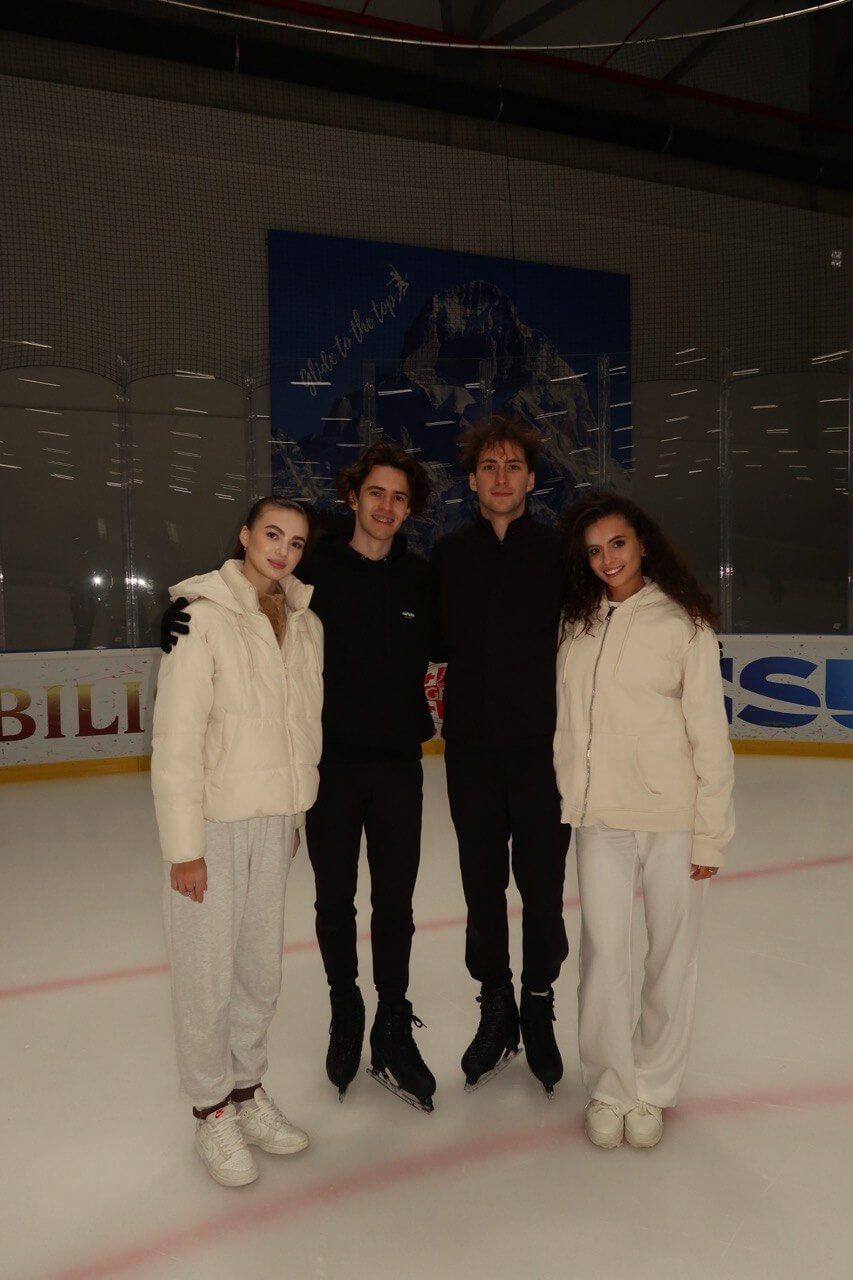
Turns out she's friends with Misha Shaidorov's girlfriend, by the way — his Aislu also used to do rhythmic gymnastics. When I told Misha about Dasha, Aislu very sternly warned me not to dare hurt her. The two of them came to visit us in Georgia in the spring; we traveled around the country and had a great time.
— Friends as families.
— It gets even funnier. Dasha's also friends with Luka's girlfriend. Actually, Dasha and I were the ones who set him up with Sonya. So the group really is great.
— Does Dasha live in Georgia or Moscow?
— Tbilisi for now, but we're thinking about a move to Moscow in the fall.
— Does the relationship get in the way of training?
— Not at all. Dasha's a former athlete, she knows exactly how elite sport works. If anything it's the opposite: where an ordinary girl might get tense that I want to be alone before a competition, she gets it. She's started getting into skating now, comes to my practices sometimes, and she's really supportive. That's nice, of course.
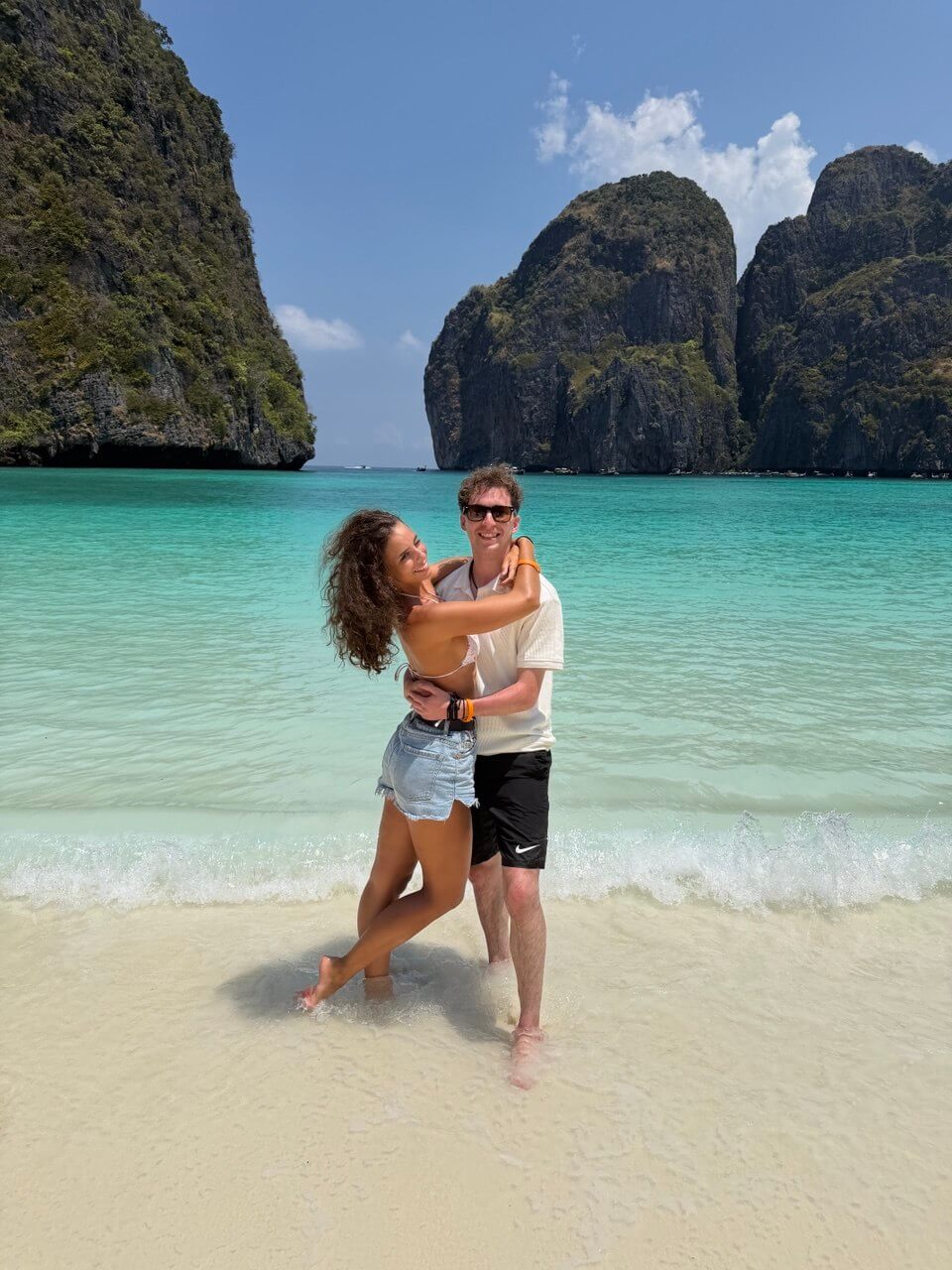
— Have you introduced Dasha to the Federation president yet?
— Of course. Maka (Mariam Giorgobiani, head of the Georgian Figure Skating Federation — Sports) approved of my choice.
Photos: ISU, instagram.com/nika_egadze, Egadze's personal archive; RIA Novosti / Santo Stefano